Parinaam Foundation has been a beacon of hope for urban, low-income communities in India since 2006. With a vision to eliminate generational poverty, the foundation focuses on holistic development through education, social inclusion, and financial literacy.
Our collaboration centered on designing and developing a web application for their Urban Ultra Poor Program (UUPP) — a flagship initiative that empowers urban slum families in Bangalore. Over 8,850 families across 135 slums have benefited from this program, gaining access to financial, healthcare, and educational support.
This project aligns with my passion for creating socially impactful designs. The goal was to build a web application that streamlined their outreach efforts while effectively showcasing their impact and facilitating deeper engagement with stakeholders.
– Mahatma Gandhi
Financial Literacy
- Educating families on savings, bank usage, and financial planning.
- Facilitating bank account creation and access to financial products.
Healthcare Support
- Awareness on hygiene, nutrition, maternal health, and family planning.
- Organizing health camps, vaccinations, and deworming programs.
Livelihood Development
- Providing vocational training and job placement support.
- Supporting skill development and new business opportunities.
Childcare and Education
- Enrolling dropouts in schools and providing remedial tuition.
- Promoting education through summer camps and academic adoption programs.
Social Support
- Weekly family meetings for guidance and support.
- Assisting with KYC and social benefit program enrollments.
In my initial research for the Urban Ultra Poor Program (UUPP), I identified several critical pain points for the primary user personas—Super Admins, Supervisors, and Field Workers—that were significantly hindering the program’s efficiency and effectiveness.
Challenges for Super Admins and Supervisors
Manual Data Management: Reliance on Excel sheets to track and manage beneficiary data became cumbersome as the program scaled, leading to inefficiencies.
Lack of Analytical Tools: The absence of dashboards or analytical tools made it difficult to monitor program progress, meet reporting requirements, or make data-driven decisions.
Auditing Bottlenecks: Limited access to structured reports hampered auditing and compliance processes.
Challenges for Field Workers
Outdated Paper-Based Processes: Data collection relied on physical forms, increasing the risk of human error and complicating record maintenance.
Lack of Real-Time Access: Managing and transporting physical forms delayed data consolidation and prevented real-time insights.
User Constraints: Many Field Workers had limited technical expertise, requiring a highly intuitive and straightforward interface.
The Need for a Unified Solution
These insights underscored the necessity of a unified web and tablet application.
The goal was to:
1. Streamline data collection and validation processes.
2. Improve accuracy and minimize errors.
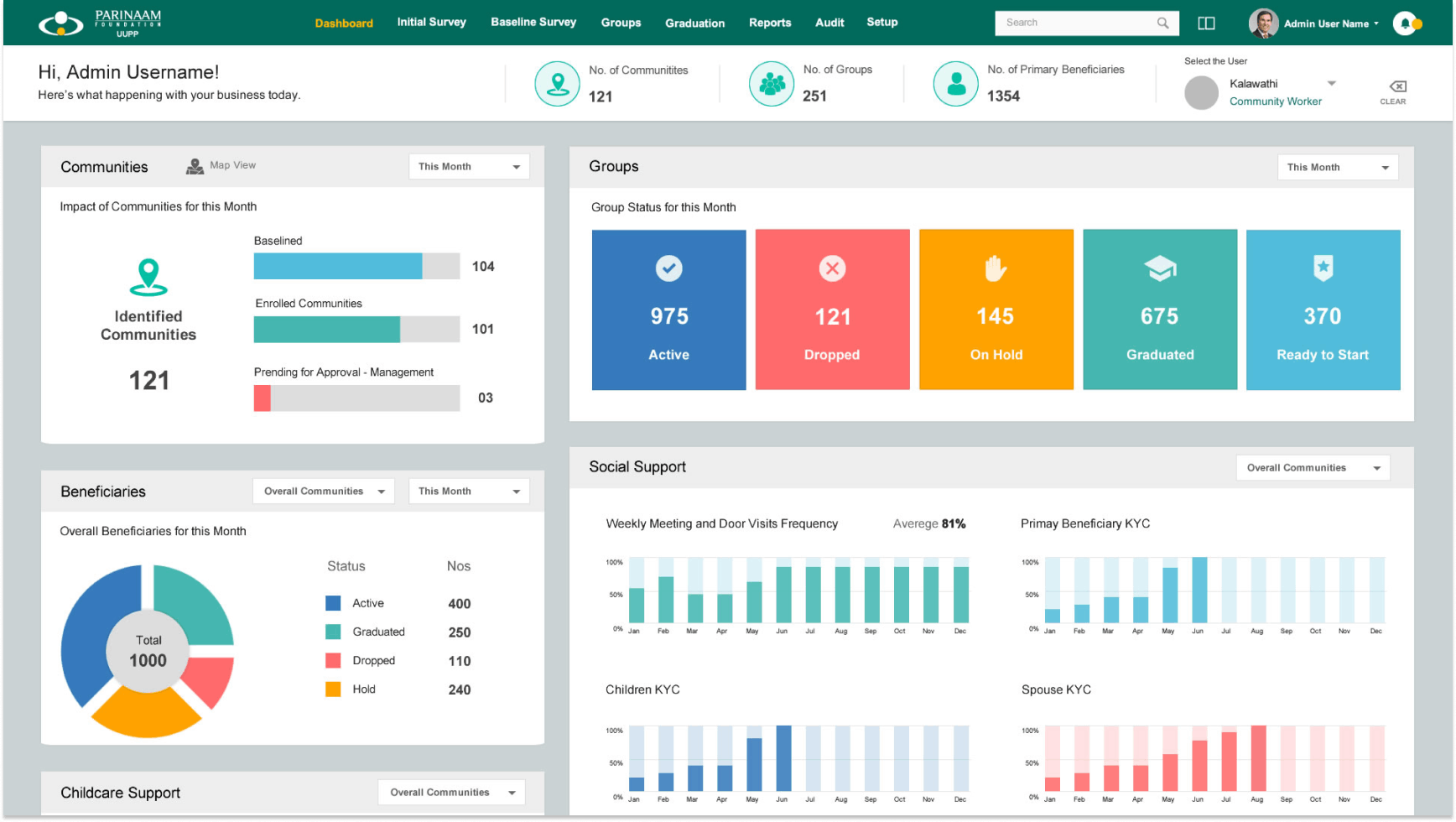
3. Enable real-time tracking and reporting through intuitive dashboards.
4. Simplify workflows for all user personas, ensuring accessibility and ease of use.
By addressing these challenges, the application would not only enhance operational - efficiency but also empower the program to better serve the ultra-poor communities it supports.
Content Management
Managing data was a significant challenge, as the stakeholders provided extensive and disorganized Excel sheets and paper forms.
I meticulously analyzed and categorized this data, transforming it into structured fields for UI forms. This laid the groundwork for an efficient and user-friendly interface.
Addressing Core Challenges
To tackle the unique needs of each user role, I followed a structured approach:
Field Workers
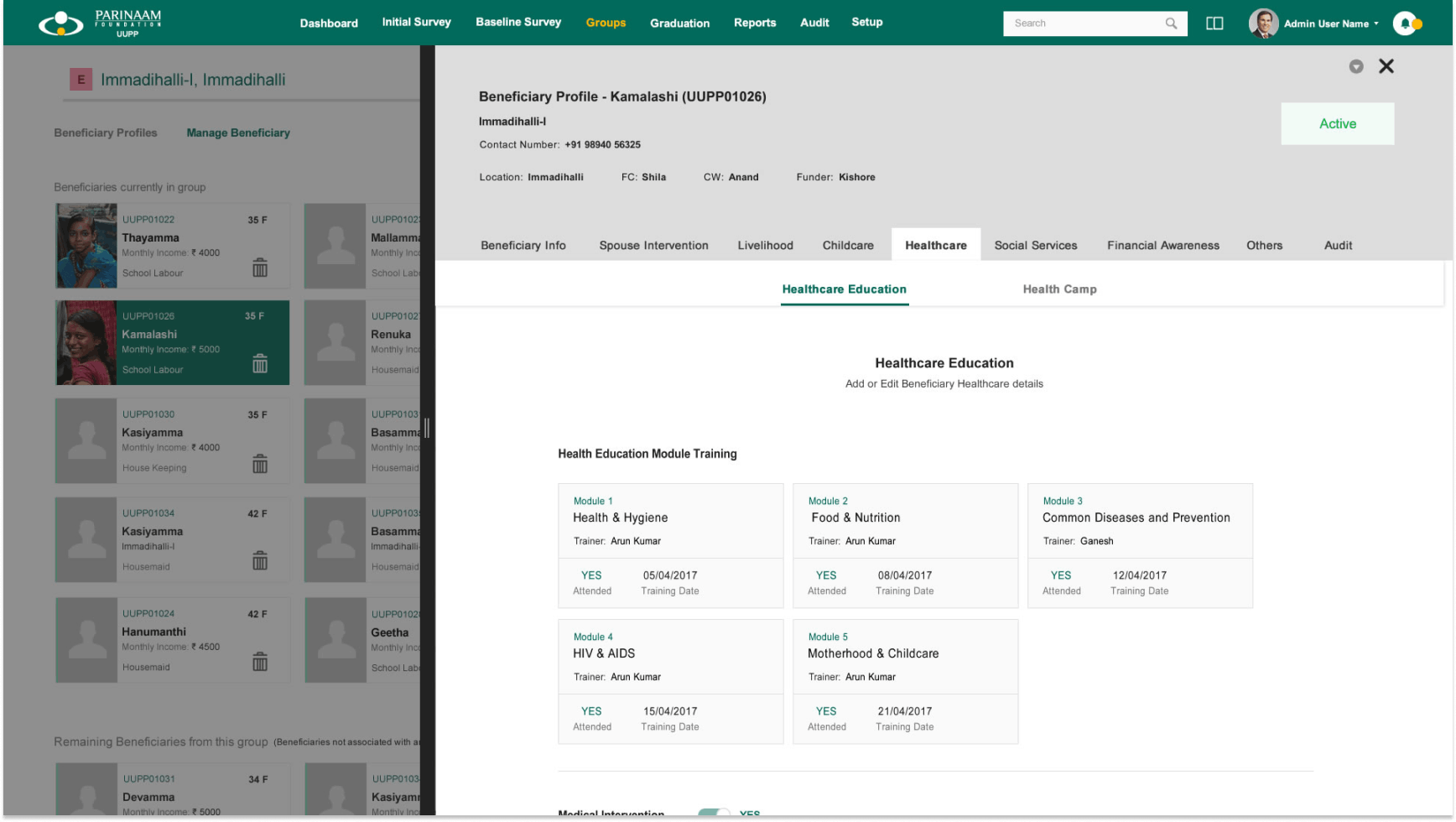
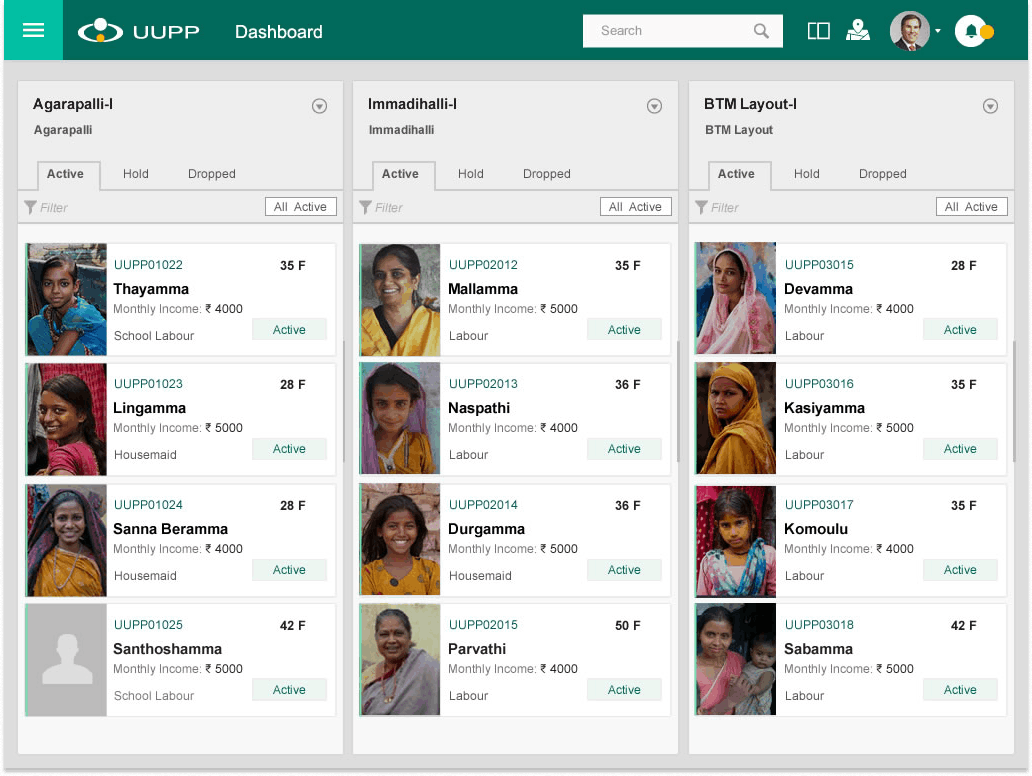
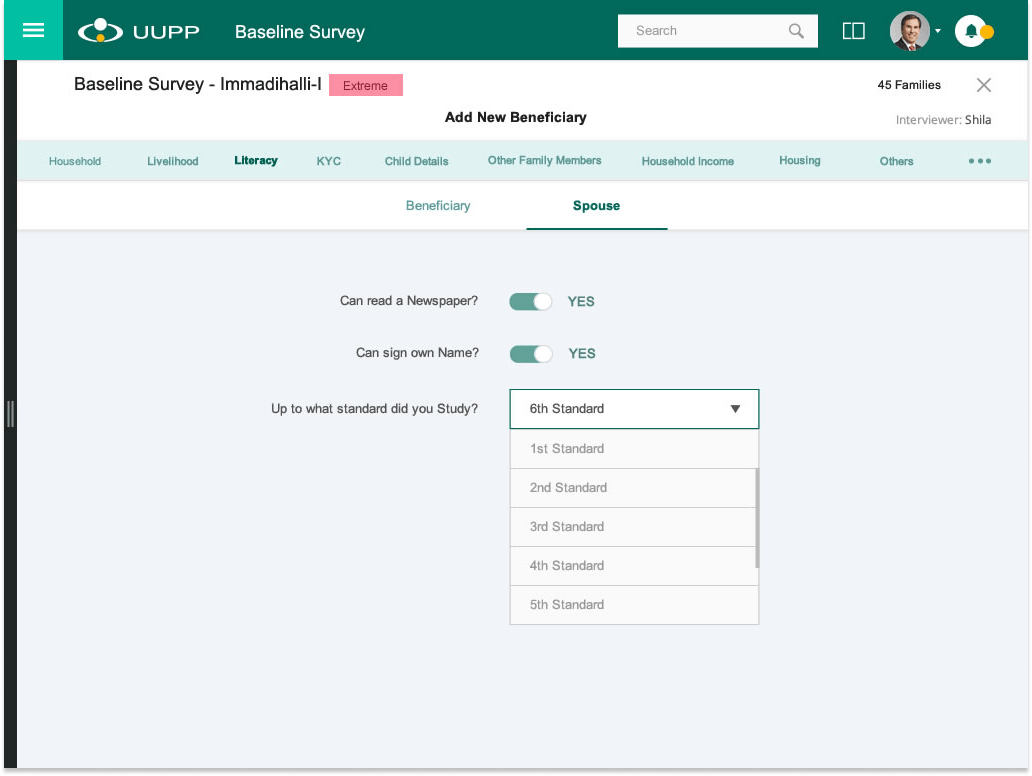
1. Field Workers relied on paper forms for data collection, which needed to transition into a tablet application.
2. created low-fidelity wireframes for the tablet app, ensuring an intuitive Information Architecture (IA) with a simplified main menu for easy navigation.
3. Recognizing their limited technical knowledge, I designed simple, accessible UI components to enhance usability.
Supervisors
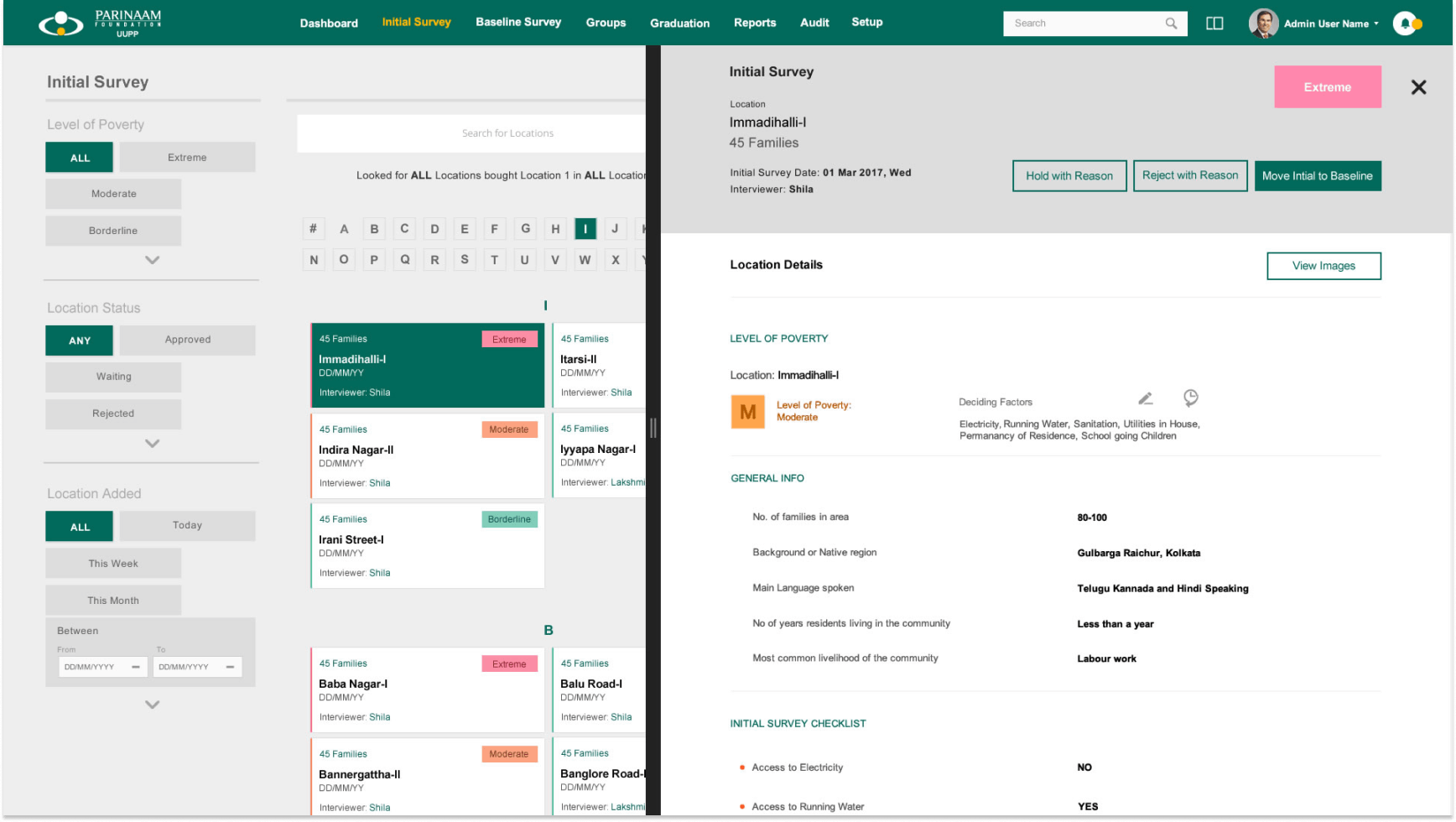
1. Supervisors managed 10–20 Field Workers and validated survey details before approval.
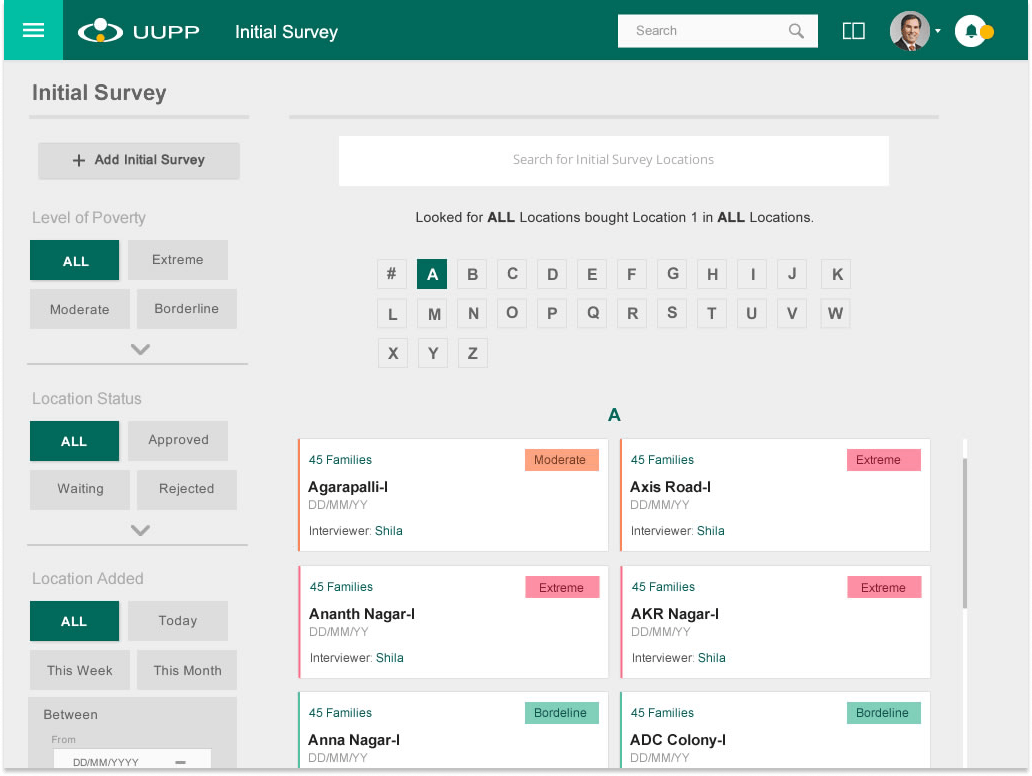
2. I developed interfaces with a structured IA that streamlined data management and hierarchical workflows.
3. Low-fi wireframes were validated through interviews with the Product Manager to align with operational goals.
Super Admin
1. Super Admins required oversight of the entire system and access to real-time analytics and data insights.
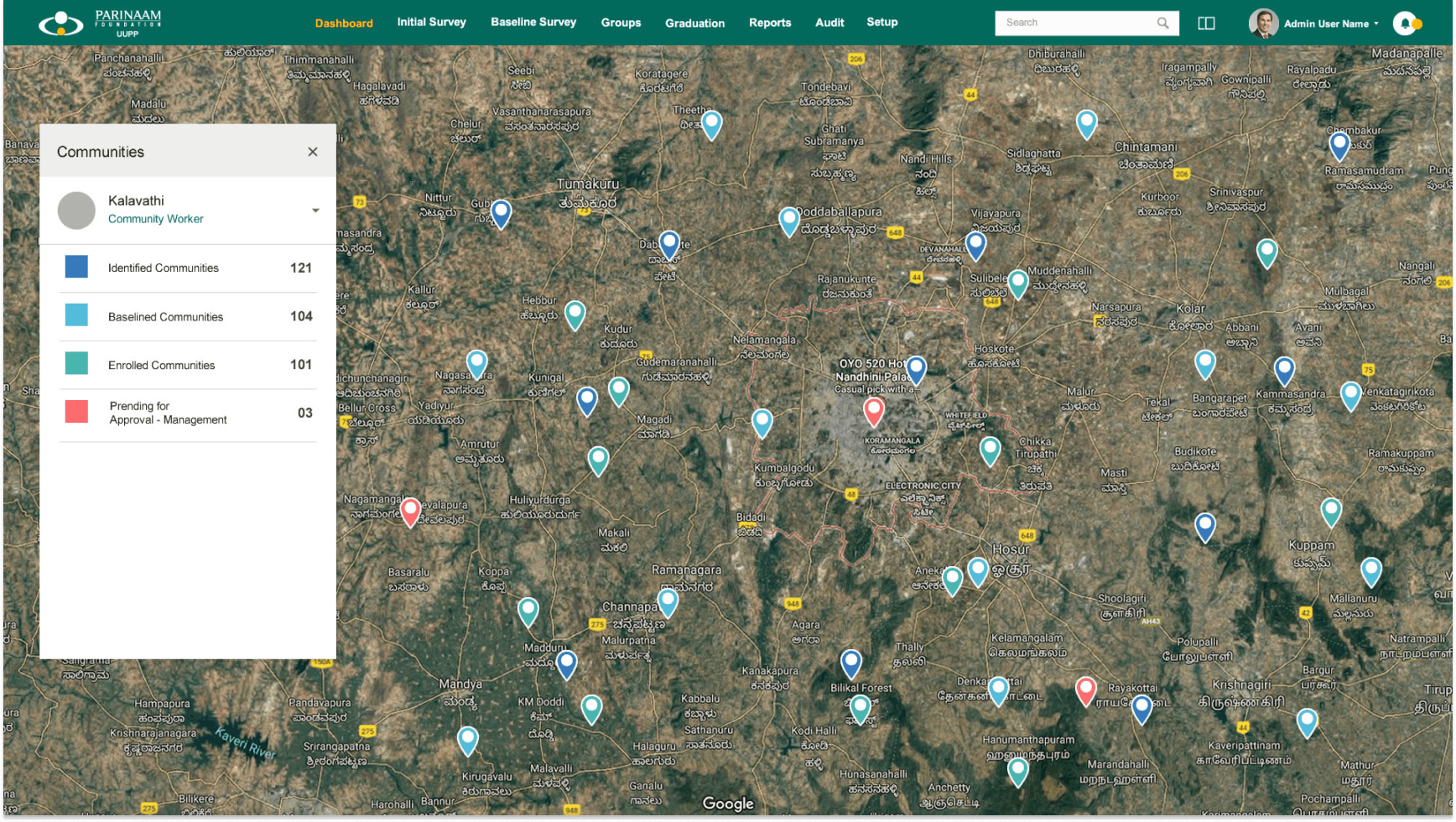
2. I created intuitive widgets for dashboards, including map views, to provide actionable insights.
3. A dedicated UI design library was built before creating high-fidelity designs, ensuring consistency across components.
Iterative Refinements
1. Usability testing was conducted after the hi-fi designs to validate the interface and gather feedback.
2. I collaborated closely with developers to ensure seamless alignment between design and implementation, addressing challenges iteratively throughout the process.
Increase in productivity for Field Workers with the transition from paper forms to a tablet application.
Reduction in errors through field validations and digital data entry.
Increase in family enrollments within six months of deployment.
Understanding the Needs of Diverse User Personas
Working on this project helped me understand the nuances of designing for a wide spectrum of users, from Super Admins with analytical needs to Field Workers with minimal technical expertise.
It emphasized the importance of creating scalable and inclusive solutions tailored to each persona's specific requirements.
Tackling Complex Data Structuring
Analyzing and organizing large volumes of unstructured data from Excel sheets and paper forms into user-friendly formats was a significant challenge.
This experience underscored the critical role of efficient data organization and categorization in creating intuitive digital interfaces.
Designing for Accessibility
I recognized the need to simplify navigation and interface design for users with limited education and technical skills.
This reinforced my commitment to prioritizing accessibility and usability, ensuring the solution was practical and easy to adopt for all users.
Building Resilient UI for Scalability
Designing a solution that could support the future growth and scalability of the program taught me to adopt a forward-thinking approach.
It reinforced the importance of crafting resilient and adaptable UIs to accommodate evolving user needs and organizational goals.
Join for breaking the cycle of poverty.
Your donation can provide education, healthcare, and livelihood support to urban ultra-poor families, transforming lives for a brighter future.
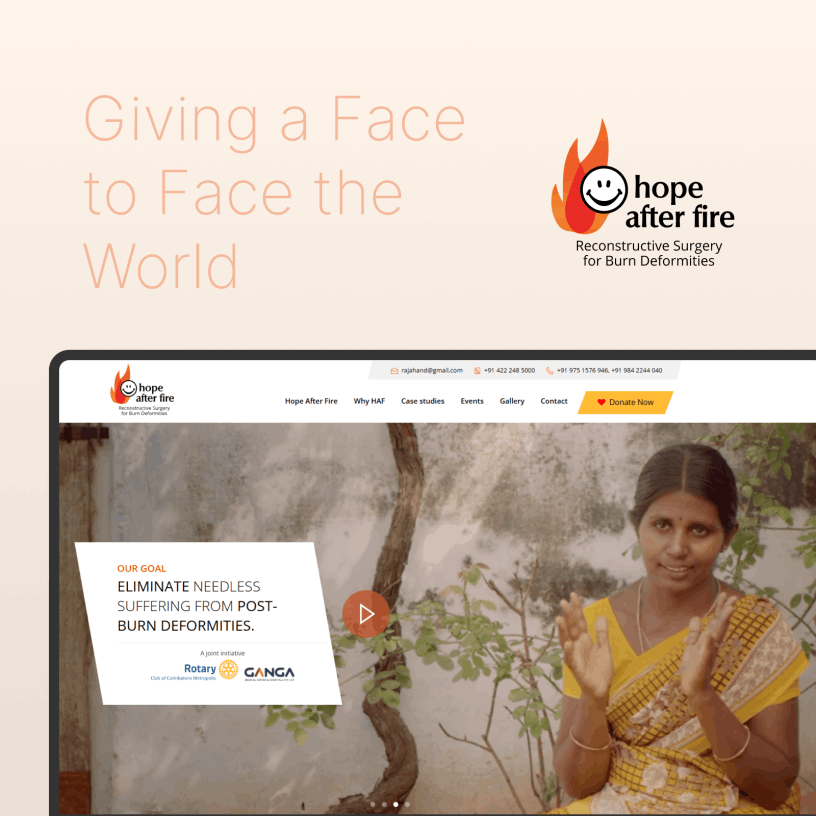
A web project designed to support burn survivors by facilitating reconstructive surgeries and raising awareness.
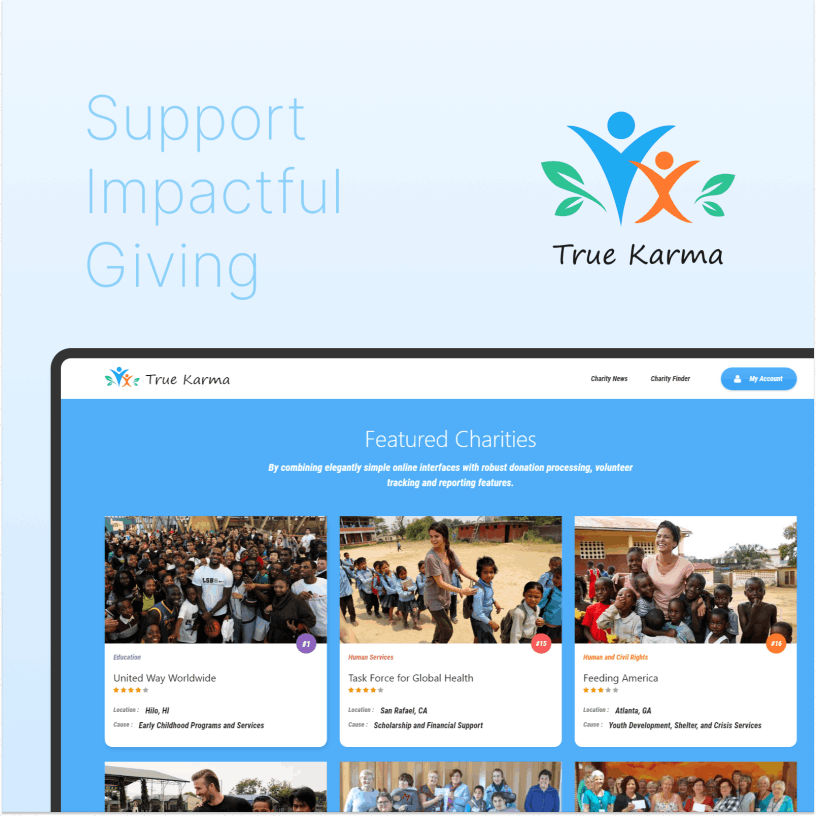
Crafting an intuitive platform to simplify donations, fundraisers, and event management, fostering impactful social change.