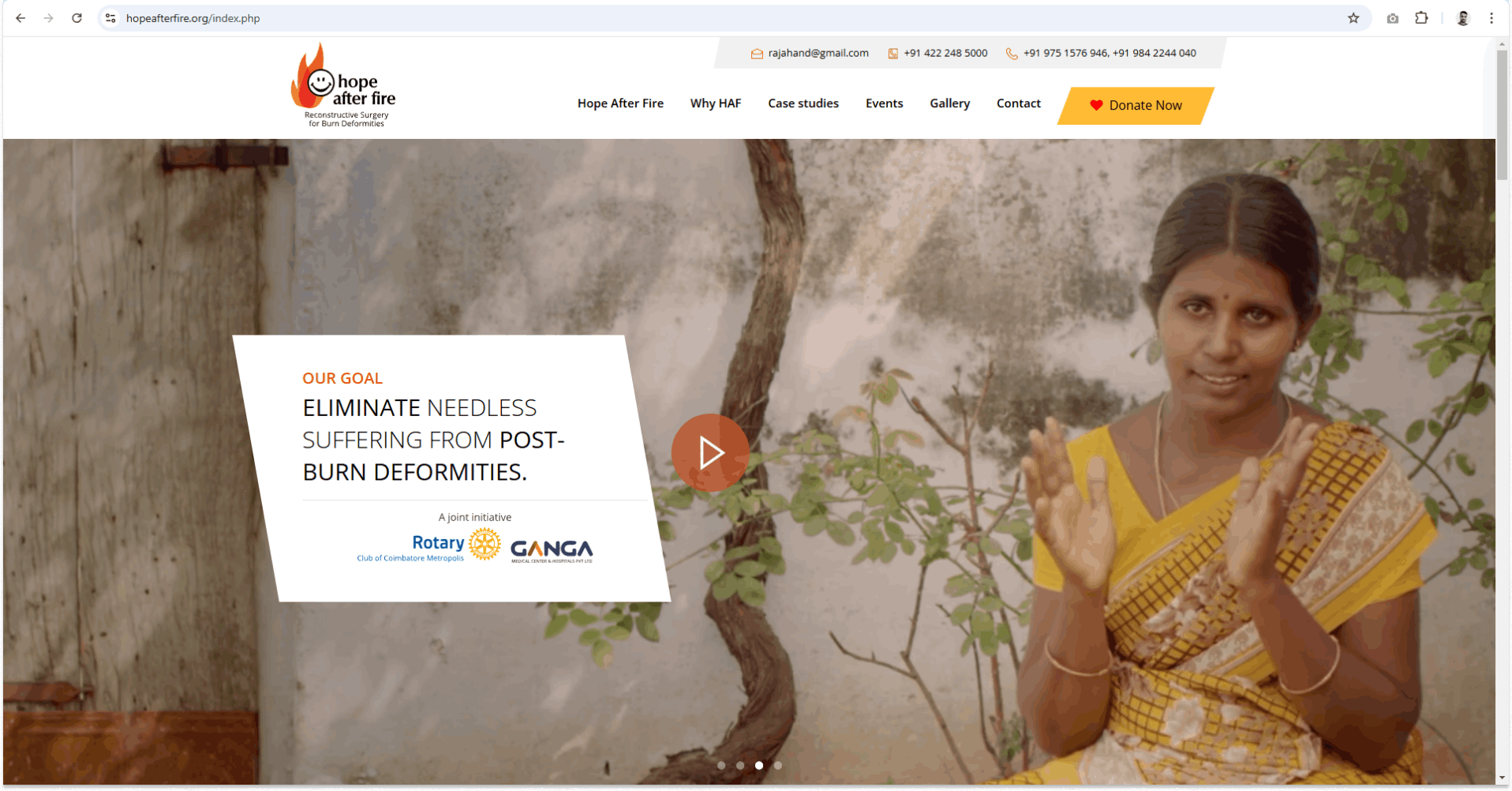
Burn injuries are a pressing challenge in developing countries, with 95% of cases occurring in such regions—India being a significant contributor.
Hope After Fire is a life-changing initiative by Ganga Hospital, Coimbatore, and the Rotary Club of Coimbatore Metropolis, dedicated to providing reconstructive surgeries that correct deformities in burn survivors.
I am incredibly grateful to BetterLives and Ganga Hospital for entrusting me with the opportunity to design the website for this noble project.
It is one of my most personally satisfying experiences, as the work directly contributes to restoring hope and improving the quality of life for those in need.
This case study details my journey of crafting a digital platform that aligns with the mission of Hope After Fire, ensuring it effectively communicates its purpose and connects with its audience.
– Hippocrates
In this section, we delved into the need for this project, gathered the requirements, and curated the content for the website.
To learn more about the Birth of the Idea, click here.
One of the main challenges was working with the images and videos of burn victims—content that is both deeply distressing and emotionally overwhelming.
This aspect of the project led to its rejection by two previous designers.
However, driven by my natural resilience and commitment to making a difference, I accepted this challenge and began crafting a design that honors the courage of burn survivors while presenting the content with sensitivity and dignity.
As part of our commitment to this noble cause, our company proudly provided the design, development, and maintenance of this website entirely free of cost.
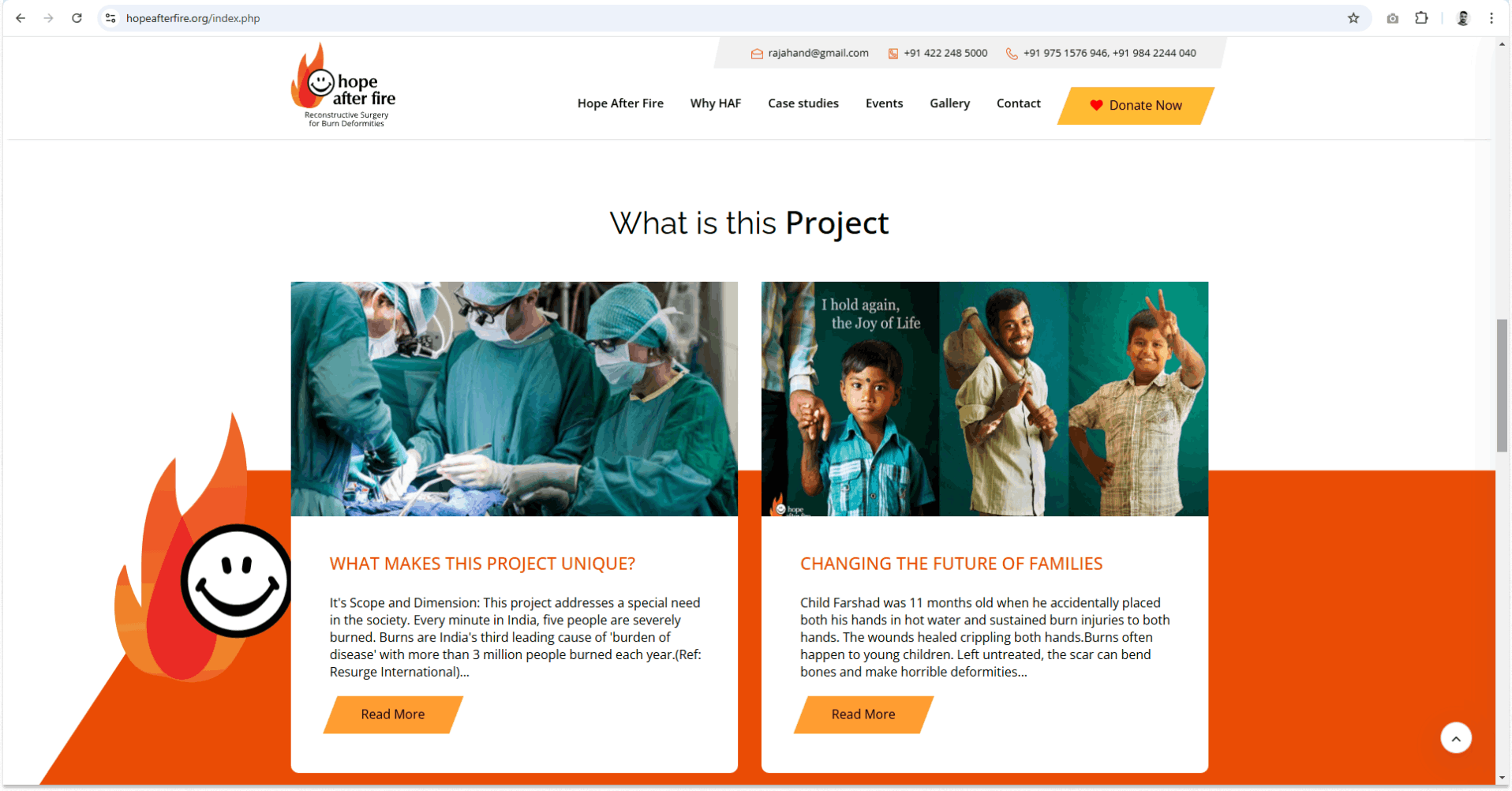
Collaboration with Stakeholders
We began by collaborating closely with Ganga Hospital to deeply understand the project's objectives and its importance.
This step helped us align our efforts with the project's mission of supporting burn survivors.
Research and Analysis
To ensure the design resonated with the goals of a charity initiative, I conducted extensive research on NGO and charity websites.
This included analyzing their workflows, understanding user journeys, and performing competitor research to gather insights for creating a compelling and functional website.
Content Collection and Planning
I collected all necessary content, images, and videos, and categorized them systematically.
This phase involved defining clear content strategies to ensure the information was presented in an empathetic and impactful manner.
Information Architecture and Sitemap
Using the content plan, I developed a clear information architecture and sitemap.
This ensured the website structure was intuitive, enabling users to easily navigate and find relevant information.
Wireframing
Low-fidelity wireframes were created based on the sitemap and content organization. These wireframes focused on achieving the project's goals, which were validated through reviews with my team lead.
High-Fidelity Designs
I crafted high-fidelity designs in Adobe XD, drawing inspiration from the project logo for the theme, colors, and typography.
The designs incorporated placeholders for sensitive images and videos to maintain focus during development.
Multiple revisions were made based on feedback from heads and stakeholders to refine the visual and functional aspects.
Development Handoff
The finalized Adobe XD designs were handed off to developers with placeholder images and videos to minimize emotional discomfort during implementation.
Responsive Testing and Final Touches
After development, I conducted responsive testing across various devices to ensure consistency and usability.
Sensitive images and videos were added to their respective placeholders, completing the website content.
Disclaimer Integration
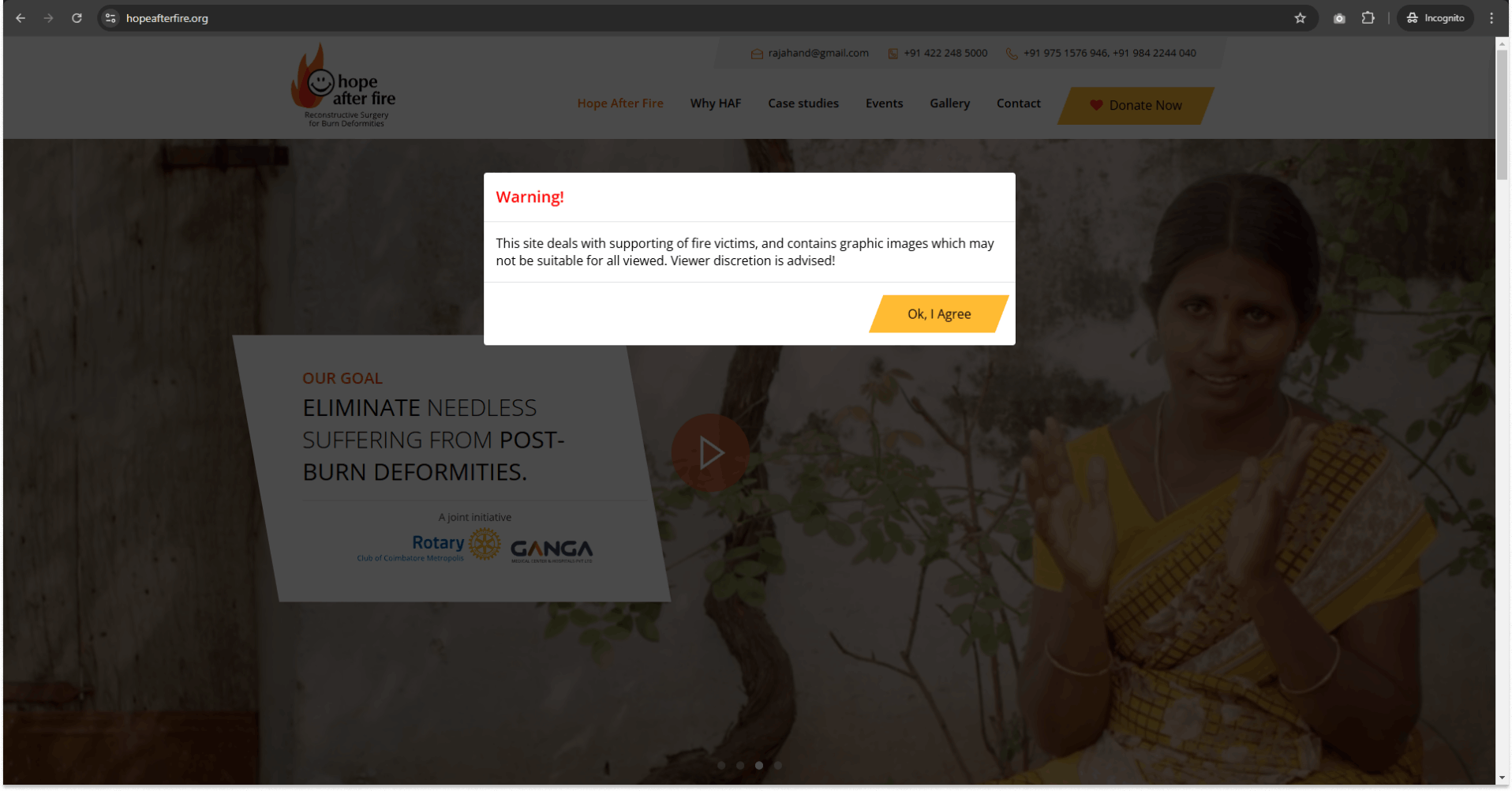
To address the sensitivity of the subject matter, I implemented a disclaimer popup at the website's entrance, ensuring users were informed about the nature of the content.
This structured approach enabled us to deliver a meaningful, user-centric design for the "Hope After Fire" initiative, balancing empathy, functionality, and sensitivity.
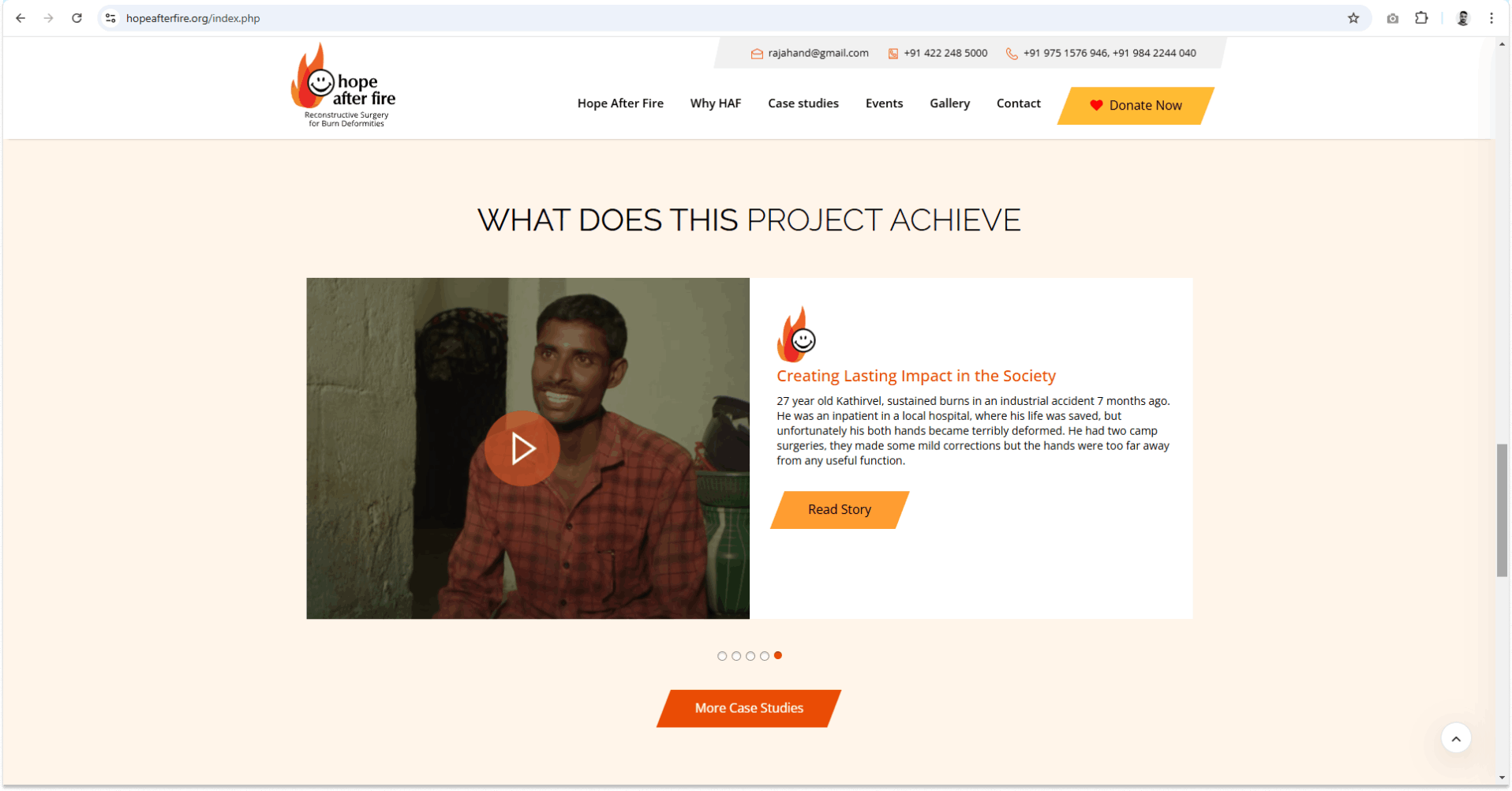
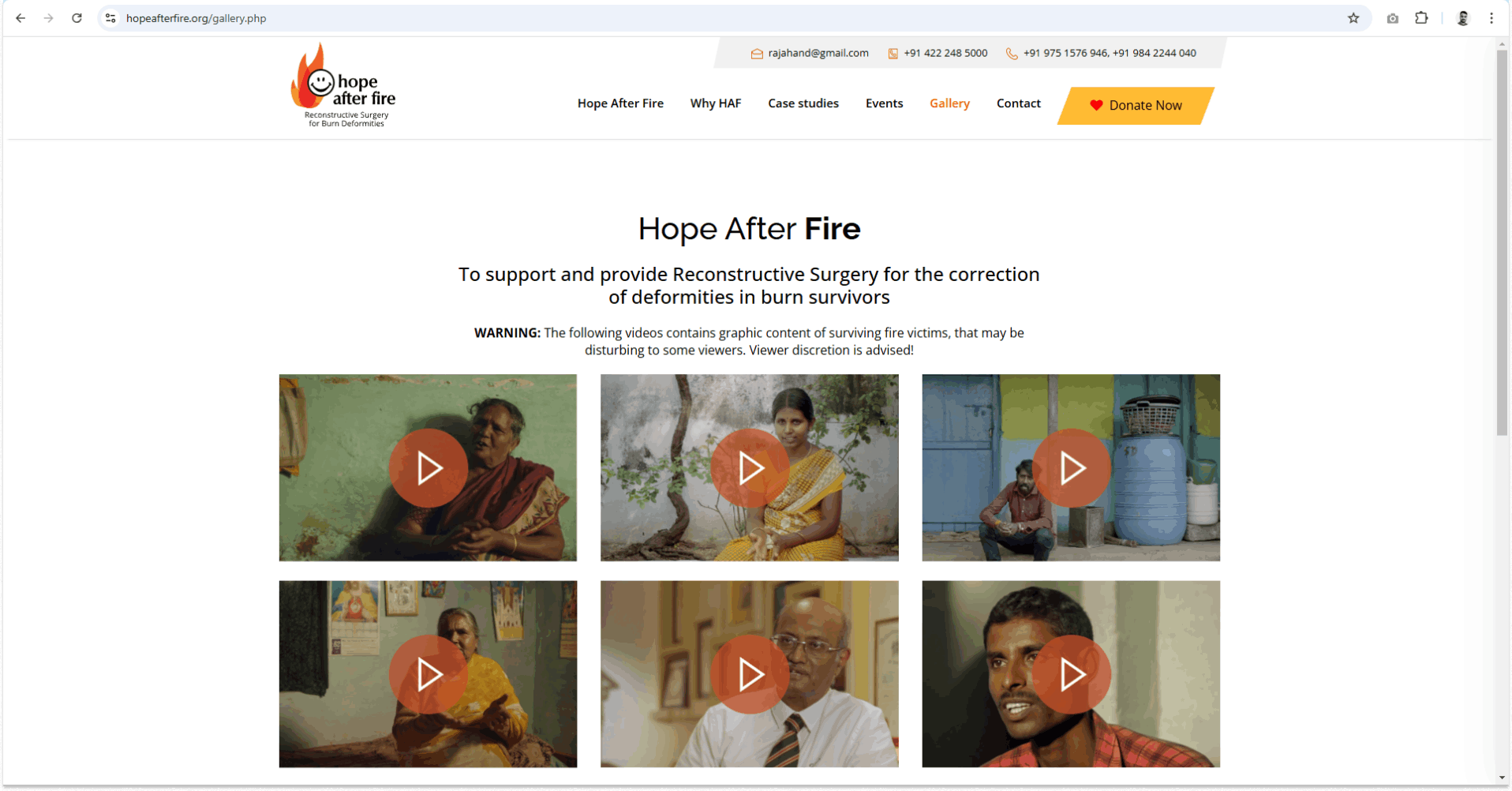
The launch of the "Hope After Fire" website brought immense recognition and appreciation from society.
Among the many heartfelt responses, I was personally applauded by Dr. Raja Sabapathy, Chairman of Ganga Hospital, and members of the Rotary Club of Coimbatore Metropolis through an email.
This acknowledgment not only validated the effort but also deepened my emotional connection to the cause.
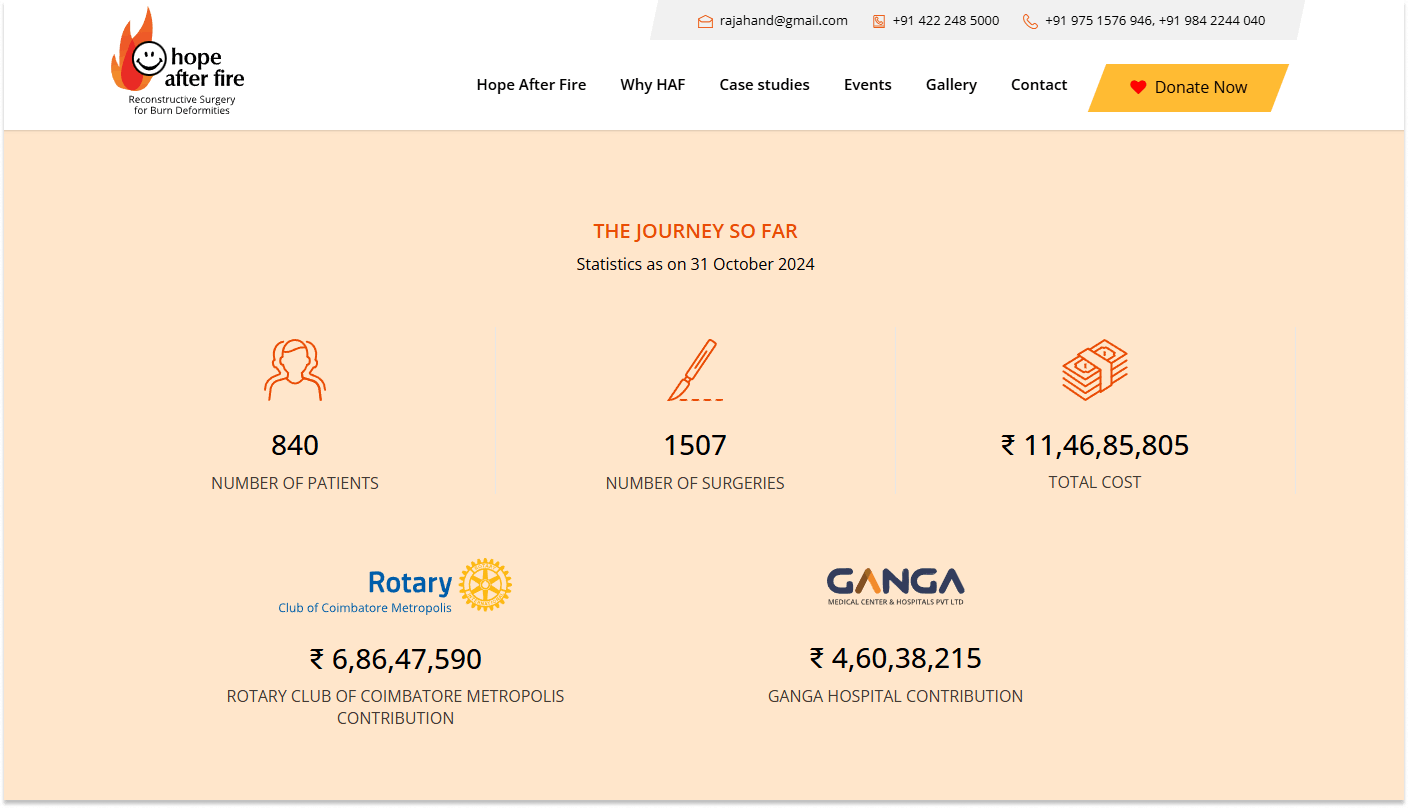
Source : Hope After Fire
This project tested and strengthened my natural resilience, allowing me to work with emotionally challenging content while staying focused on the mission.
I developed a deeper sense of empathy by understanding the lives of fire burn survivors, their struggles, and their incredible courage.
This experience reshaped my perspective, making me more sensitive to the needs of others in my designs.
The journey brought immense satisfaction, knowing that my work could contribute to a cause that transforms lives.
It also made me reflect on my own blessings, leaving me with a profound sense of gratitude for my life and a renewed habit of thanking God for the opportunities I have.
This project not only sharpened my professional skills but also enriched me emotionally, teaching me the true impact design can have in bringing hope and healing to others.
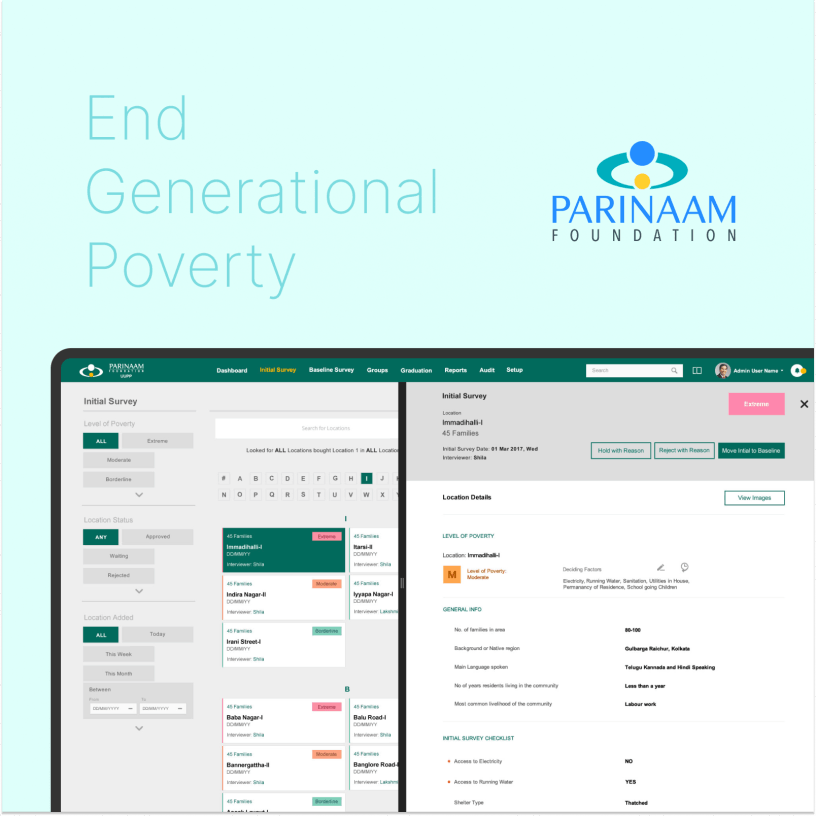
Streamlining data management for admins and field workers with intuitive tools, empowering urban low-income communities.
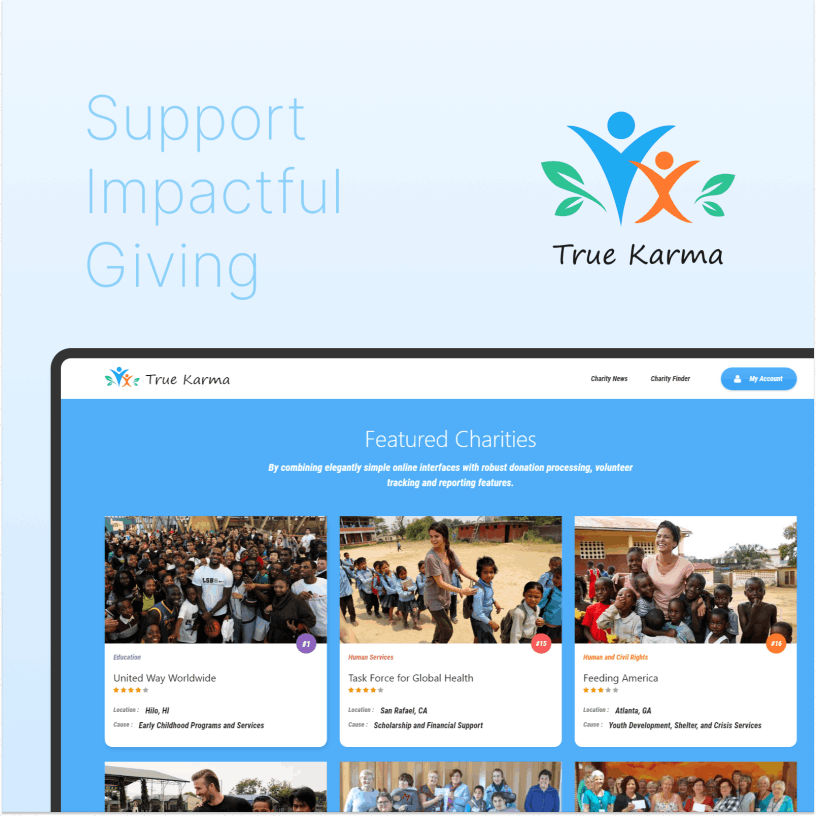
Crafting an intuitive platform to simplify donations, fundraisers, and event management, fostering impactful social change.
Your contribution can make a difference in the lives of burn survivors.
Visit the Hope After Fire website to learn more about the initiative, its impact, and how you can help.
Every donation counts.